Reading of Because I Could Not Stop for Death
Emily Dickinson's poems inform my own worldview as a poet and scholar. They dramatize the human spirit via deep attending to life's details.
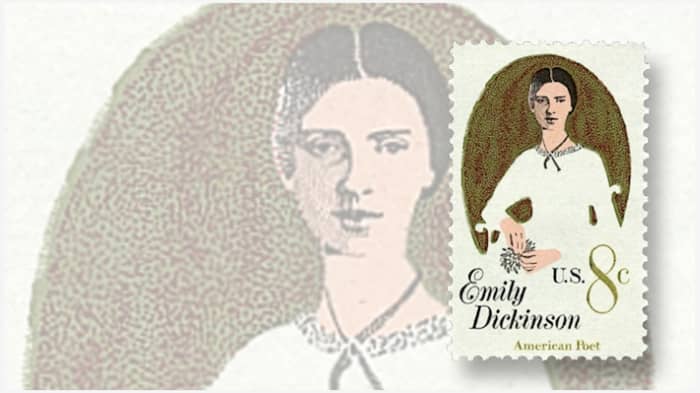
Emily Dickinson - Commemorative Stamp
Linn'due south Stamp News
Introduction and Text of "Because I could not cease for Decease"
Emily Dickinson'due south cosmic drama, "Considering I could not stop for Death," (712 in Johnson's Consummate Poems) features a carriage driver who appears to be a admirer caller. The speaker puts down her piece of work and her leisure time in club to accompany the gentleman on a carriage ride.
Special childhood memories often spur poets to pen poems influenced by musing on such memories: examples include Dylan Thomas' "Fern Colina," Theodore Roethke's "My Papa's Waltz," and that well-nigh perfect poem by Robert Hayden "Those Winter Sundays." In "Because I could not stop for Expiry," the speaker looks dorsum at a much more than momentous occasion than an ordinary childhood recollection.
The speaker in Dickinson's memory poem is remembering the day she died. She metaphorically frames the occasion equally a carriage ride with Decease personified as a admirer caller. This speaker peers into the level of existence beyond the earthly into the spiritual and eternal.
Interestingly, the procession that the wagon ride follows whispers an repeat of the notion that in the process of dying the soul invasions its past life. As the speaker reports passing past a schoolhouse and noting that children were there striving, and and so they drove by field of grain and observed the dusk —all things that the speaker would have experienced likely repeatedly in her lifetime.
Because I could not stop for Death
Because I could not cease for Death –
He kindly stopped for me –
The Carriage held simply just Ourselves –
And Immortality.
We slowly collection –He knew no haste,
And I had put away
My labor and my leisure too,
For His Civility –
We passed the Schoolhouse, where Children strove
At recess –in the ring –
We passed the Fields of Gazing Grain –
Nosotros passed the Setting Dominicus –
Or rather –He passed U.s. –
The Dews drew quivering and chill –
For just Gossamer, my Gown –
My Tippet –but Tulle –
We paused earlier a Business firm that seemed
A Swelling of the Ground –
The Roof was scarcely visible –
The Cornice –in the Ground –
Since then –'tis centuries – and yet
Feels shorter than the Day
I first surmised the Horses' Heads
Were toward Eternity –
Reading of "Considering I could stop for Death"
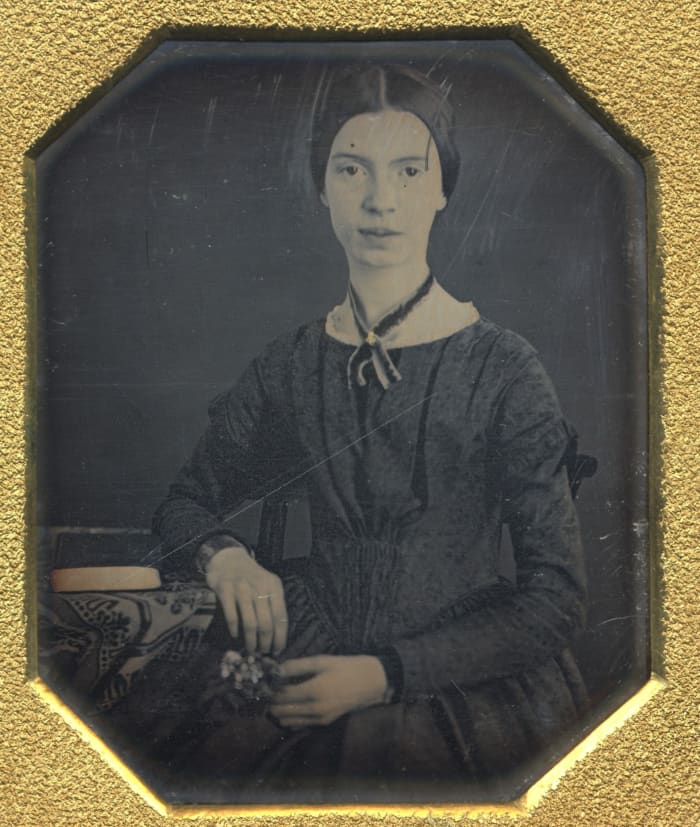
Emily Dickinson at historic period 17 - This daguerreotype is likely the only extant authentic image of the poet.
Amherst College
This fascinating cosmic drama features a carriage driver who appears to be a gentleman caller. The speaker abandons both her work and leisure in lodge to accompany the gentleman on a carriage ride.
Read More From Owlcation
First Stanza: An Unorthodox Carriage Ride
Because I could not cease for Decease –
He kindly stopped for me –
The Carriage held but just Ourselves –
And Immortality.
In the commencement stanza, the speaker startlingly claims that she was unable to "stop for Decease"; only nevertheless, Death has no trouble stopping for her. And he did so in such a polite manner. The speaker continues with another shocking remark, reporting that the carriage in which the speaker and gentleman caller Death rode carried merely the speaker and the admirer forth with one other passenger, "Immortality."
The speaker thus far has begun to dramatize an extremely unorthodox wagon ride. The kind admirer Expiry has picked up the speaker as if she were his date for a uncomplicated buggy ride through the countryside.
Second Stanza: The Gentleman Caller
We slowly drove –He knew no haste,
And I had put away
My labor and my leisure besides,
For His Civility –
The speaker continues to depict her momentous outcome. She has non merely stopped engaging in her piece of work just she has likewise ceased her leisure –merely equally anyone would await of someone who has died.
The admirer caller was so persuasive in insisting on a carriage ride that the speaker easily complies with the admirer's wishes. This kind and gracious gentleman "knew no haste" but offered a methodical ushering into the realms of peace and repose.
Tertiary Stanza: A Review of a Life Lived
We passed the Schoolhouse, where Children strove
At recess –in the ring –
We passed the Fields of Gazing Grain –
We passed the Setting Sunday –
The speaker and then reports that she can view children playing at schoolhouse. She encounters corn fields and wheat fields. She views the dominicus setting. The images portrayed might appear to be emblematic of three stages of a homo life, with the children playing representing childhood, the fields symbolizing adulthood, and the setting sunday representing old age.
The imagery as well brings to heed the old adage of the dying person experiencing the passing of ane'southward life before ane'south vision. The viewing of past memories from the dying person's life seems to be readying the man soul for its side by side incarnation.
Fourth Stanza: The Scenes are Passing
Or rather –He passed U.s.a. –
The Dews drew quivering and chill –
For only Gossamer, my Gown –
My Tippet –only Tulle –
The speaker is dressed in very low-cal textile, and on the ane hand, she thus experiences a chill at witnessing the startling images passing her sight. But on the other hand, information technology seems that instead of the wagon passing those scenes of children play, grain growing, and sunday setting, those scenes are actually passing the carriage riders. This plough of events once once more supports the notion that the speaker is viewing her life passing before her eyes.
5th Stanza: The Pause
We paused before a House that seemed
A Swelling of the Ground –
The Roof was scarcely visible –
The Cornice –in the Ground –
The carriage is now reaching its destination: the speaker's grave before which the railroad vehicle stops momentarily. The speaker dramatically portrays the prototype of the grave: "A Swelling of the Ground – / The Roof was scarcely visible – / The Cornice – in the Ground."
Sixth Stanza: Looking Dorsum From Eternity
Since then –'tis centuries – and yet
Feels shorter than the Mean solar day
I first surmised the Horses' Heads
Were toward Eternity –
In the final stanza, the speaker reports that she is at present (and has been all forth) centuries into future time. She speaks now plainly from her cosmically eternal home on the spiritual level of being. She has been reporting on how events seemed to keep the solar day she died.
She remembers what she saw only briefly just after her death. Yet that time from the day she died to her fourth dimension now centuries after feels to her soul that information technology was a very short period of time. Relatively, the fourth dimension that has passed, though it may be centuries, seems to the speaker shorter than the earthly day of 24 hours.
The speaker states that on that day, the heads of the horses pulling the carriage were pointed "toward Eternity." The speaker has clearly and unequivocally described metaphorically the transition between life and then-called death. That third occupant of the railroad vehicle guaranteed that the speaker's soul had left a torso—and not "died" at all.
© 2016 Linda Sue Grimes
whitlamfortalwyneho.blogspot.com
Source: https://owlcation.com/humanities/Emily-DickinsonsBecause-I-could-not-stop-for-Death
0 Response to "Reading of Because I Could Not Stop for Death"
Post a Comment